
Screenagers Panel Discussion Revisited
The MJR Foundation hosted a Facebook Live Webinar on January 12th, 2021 at 7:00pm to discuss the movies Screenagers and Screenagers: Next Chapter, and to provide strategies to deal with the issues raised by the films. We were grateful to be joined on the panel by a distinguished group of mental health professionals drawn from the University of Michigan, Washtenaw County Community Mental Health, the National Alliance on Mental Illness (NAMI) and the Washtenaw Intermediate School District.
Resources
National Suicide Prevention Lifeline: 1-800-273-TALK (8255) or text "GO" to 741741
Community Mental Health Crisis Line: 734-544-3050
Youth Mental Health First Aid Training: https://forms.gle/VAyQmHq27oJ8Ta2g7
#WishYouKnew

Youth Mental Health First Aid
Screenagers Parent Guide - English

Screenagers Parent Guide - Spanish
Screenagers: Next Chapter Parent Guide - English
Screenagers: Next Chapter Parent Guide - Spanish

Common Ground
Washtenaw County Community Mental Health

NAMI - Washtenaw County

Trails to Wellness

My Brother's Keeper - Washtenaw County
Panelists
Click on the photos below to view each panelist's biography.
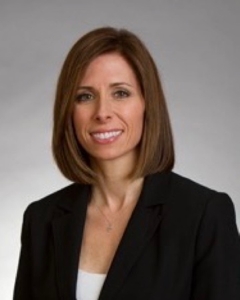
Andria Eisman
Wayne State University
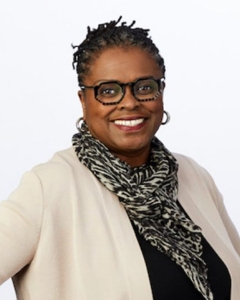
Judy Gardner
NAMI Washtenaw County
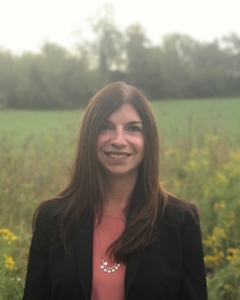
Trish Cortes
Washtenaw County Community Mental Health
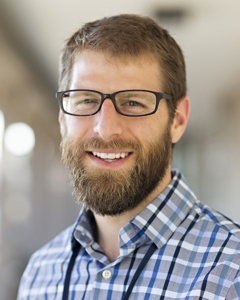
Jay Holden
Regional Alliance for Healthy Schools
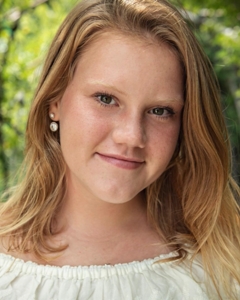
Mimi Maixner
Student, University of Michigan
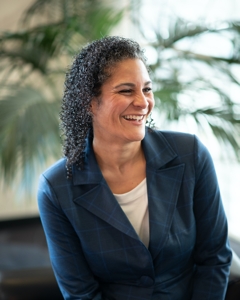
Felicia Brabec
Michigan State Representative, Psychologist
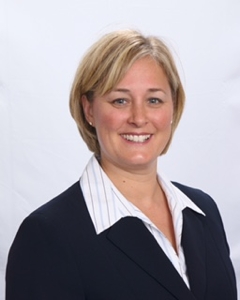
Holly Heaviland
Washtenaw Intermediate School District
Richard Dopp
University of Michigan
Tracy Loveland
Ann Arbor Public Schools
Andria Eisman
Wayne State University
Judy Gardner
NAMI Washtenaw County
Trish Cortes
Washtenaw County Community Mental Health
Jay Holden
Regional Alliance for Healthy Schools
Mimi Maixner
Student, University of Michigan
Felicia Brabec
Michigan State Representative, Licensed Clinical Psychologist
Holly Heaviland
Washtenaw Intermediate School District
Holly Heaviland has worked at Washtenaw Intermediate School District for nearly 20 years where she has served the community in a variety of roles, most recently as Executive Director of Community & School Partnerships. In this role, she oversees the educational programming for the Washtenaw County Jail and Youth Detention Center, county truancy services, as well as both formula and competitive grant funded programs, such as McKenny-Vinto services for homeless/foster care youth and mental health services in schools. She has helped to fund and create a strategic partnership team that works between county, government, post secondary, community and K12 schools to support collaborative efforts to address community priorities in Washtenaw County, with a particular focus on youth and families of color, under-represented youth in higher education, and limited income youth and families.
Previously, Holly worked with a variety of instructional projects serving traditional school districts, including managing a local project for an Investing In Innovation USDOE grant through Columbia University. She has also worked with the Michigan Association for Intermediate School Districts on innovative, educational reform projects in 10 different communities throughout the state. Holly began her career in education as a school psychologist in Williamson County, Tennessee where she served both rural and suburban schools. She relocated back to Michigan after 5 years and worked in a local school district prior to joining the Washtenaw Intermediate School District in 2002.
Holly has served her community in a variety of roles. She currently serves as a Board Member for Washtenaw Community College Foundation and a Board Member for the Community Mental Health Millage Advisory Committee. Previously, she was selected as President of the Junior League of Ann Arbor and the Michigan State Council for Junior Leagues, and the Ann Arbor Community Board for Ele's Place, a healing center for grieving children and their families. Holly obtained a Doctorate in Educational Leadership from Michigan State University. She holds an Education Specialist degree from Miami University-Ohio, and a Bachelor of Science degree from Central Michigan University. Holly is happily married to her husband, Craig Hausman; they are the proud parents of three boys, Eli (18), Kurt (16) and Leo (14).
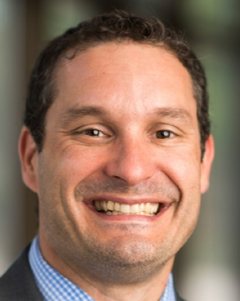
Richard Dopp
University of Michigan
Dr. Richard Dopp studied psychology as an undergraduate at the University of Michigan before spending time teaching young children with severe emotional problems and challenging family environments in Baltimore, Maryland. He returned to the University of Michigan for medical school and chose to continue his training in both adult and child psychiatry.
Currently, Dr. Dopp is a Clinical Assistant Professor in the Department of Psychiatry at UM and is the medical director of the University Center for the Child & Family and the University Psychological Clinic. His research focuses on the relationships among physical activity, sleep and depression in adolescents, and his clinical interests include working with youth and adults who are managing depression, anxiety, ADHD, ASD and other mental health conditions.
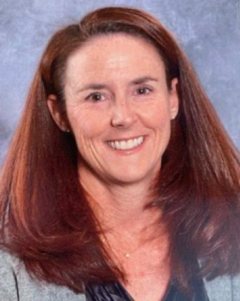
Tracy Loveland
Ann Arbor Public Schools
Dr. Tracy Loveland studied psychology as an undergraduate at the University of Michigan and then earned her doctorate in Educational Psychology with a minor in Counseling from Indiana University. For the past 21 years, she has been a school psychologist in Ann Arbor Public Schools assisting students at all levels, preschool through high school. In her role, Tracy is an integral member of a team that supports students’ ability to learn and teachers’ ability to teach. She applies her training and expertise in mental health, education, and behavior to help all students, but especially students at-risk and with disabilities succeed academically, socially, behaviorally, and emotionally. Tracy is most passionate about seeing a multi-tiered system of support (MTSS) implemented in every school by using data to assist in matching academic, social-emotional, and behavioral assessments and instructional resources to each student’s unique needs.